1966
A Legend is Born
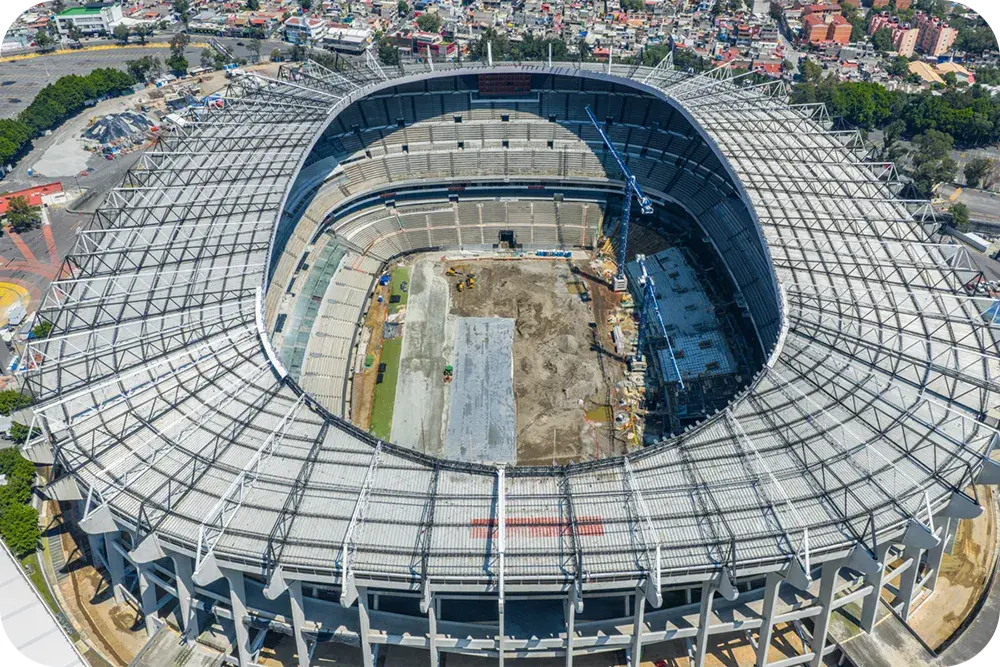
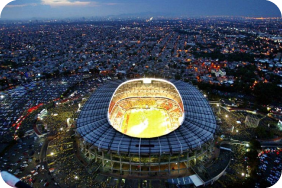
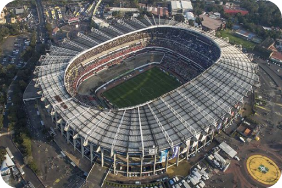
On May 29 of 1966, it was officially inaugurated with a match between Club América and Torino of Italy. Designed by the architect Pedro Ramírez Vázquez, its innovative cantilevered roof guaranteed optimal visibility from any point in the stadium. That day, a coliseum destined for history was born.
1970
The King and the Match of the Century
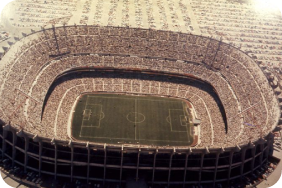
It hosted the 1970 FIFA World Cup™ Final, where Pelé led Brazil to victory and cemented his legendary status. It also hosted the so-called "Game of the Century" between Italy and West Germany, an unforgettable encounter that defined an era.
1984
First Big Renovation
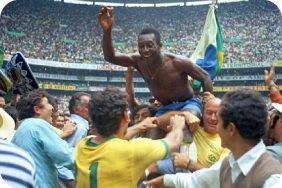
Under the guidance of its original architect, the stadium expanded its capacity and modernized its facilities. The renovation prepared it to become the first venue in the world to host two FIFA World Cups™.
1986
The Consecration of Diego
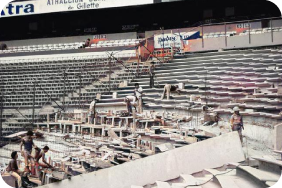
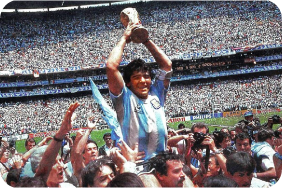
Mexico became the first host country to organize two World Cups in 1986. The soccer field witnessed Diego Maradona's "Hand of God" and "Goal of the Century" against England, moments etched in the collective memory of world football.
1993
World Boxing Record
The stadium was transformed into a monumental arena for Julio César Chávez's fight. More than 130,000 people attended, a number that set a world record for attendance at a boxing match.

1993
The King of Pop
That same year, Michael Jackson presented his “Dangerous World Tour” with five sold-out shows. More than half a million attendees witnessed a spectacle that critics hailed as one of the most impactful of its time.
1994
NFL’s Record Guinness
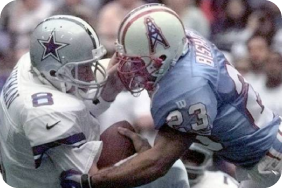
The NFL season kicked off with the American Bowl between the Dallas Cowboys and the Houston Oilers. The game entered the Guinness Book of World Records for having the highest attendance in the league’s history: 112,376 fans.
1997
Guillermo Cañedo Stadium
The stadium was officially named “Guillermo Cañedo Stadium” in honor of the executive who spearheaded its construction and the organization of the World Cups in Mexico. It was a recognition of his vision and legacy.
1999
The Comeback of the Azteca
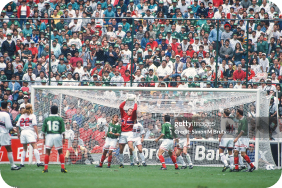
After two years, its original name was restored by popular demand. That same year, the stadium hosted John Paul II during the "Meeting of the Generations," a massive event that brought together thousands of faithful.
2016
The Future and Monday Night
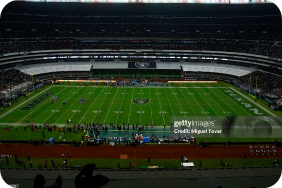
A modernization phase began with new premium areas and improved connectivity. That year, the NFL held its first Monday Night Football game outside the United States, solidifying the Azteca Stadium as a top-tier international venue.
2022
A Stage for Superstars
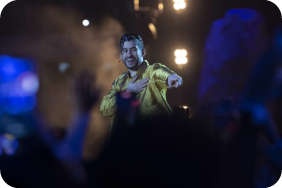
The venue reaffirmed its global status by hosting massive tours like Bad Bunny's, thus demonstrating its continued relevance as an epicenter of entertainment in Latin America.
2025
A New Era Towards 2026
An extensive technological transformation and a new chapter in its history have begun. With an eye towards the 2026 FIFA World Cup™, Mexico City Stadium is preparing to become the only venue in the world to host the opening matches of three FIFA World Cups™.